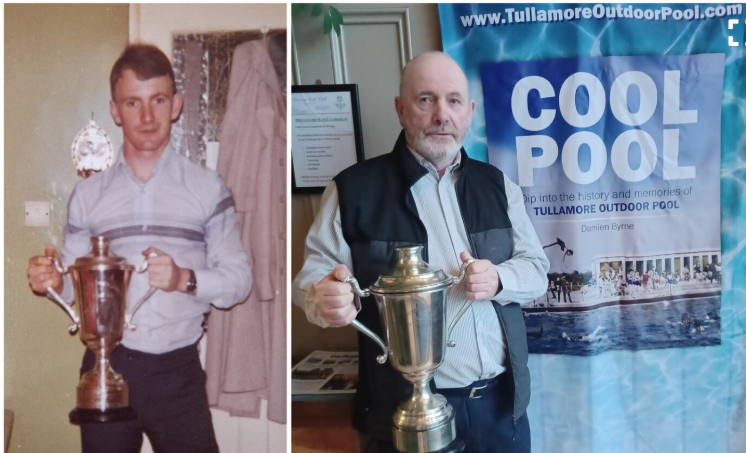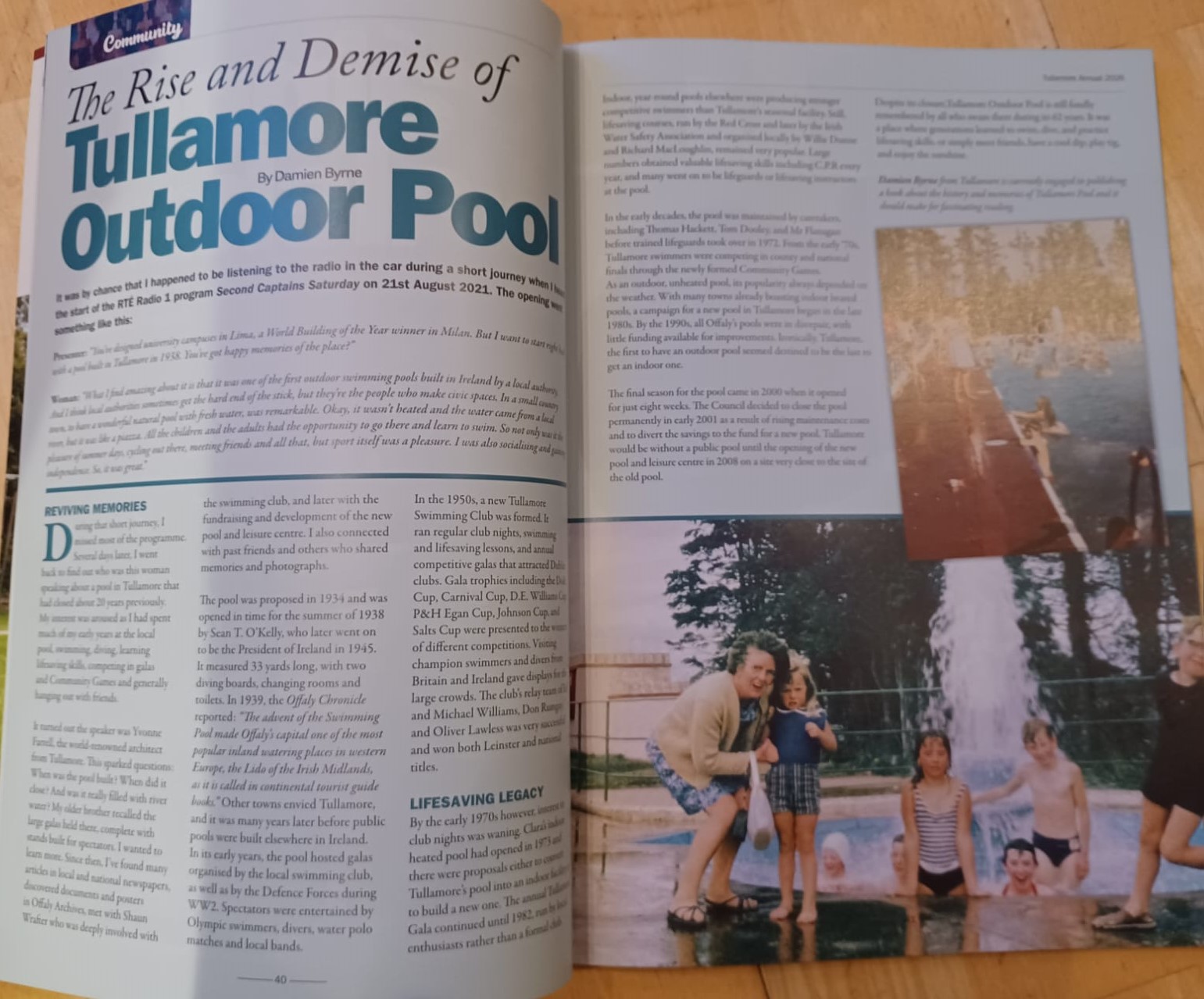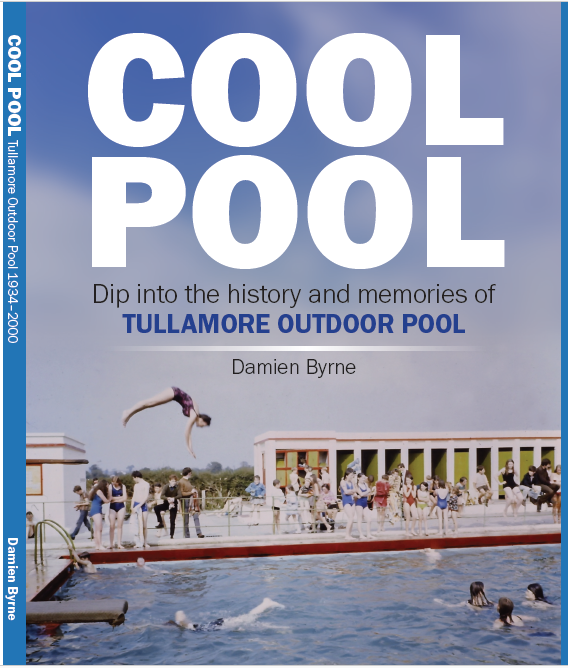
Cool Pool captures the vibrant history of the Tullamore Outdoor Pool in Co. Offaly, tracing its journey from its initial proposal in 1934 and grand opening in 1938, right up to its final season in 2000.
Mirroring the structure of the pool itself, this book is divided into six chapters to represent its six swimming lanes. Each chapter takes you on a chronological journey through time, brought to life by newspaper clippings, rare photographs, and heartfelt memories from the generations who swam there. The book also features beautiful contributions from local artists, and its distinct colour palette is directly inspired by the actual paint colours that coated the pool’s walls and railings over its 62-year history.
More than just a local landmark, the Tullamore Outdoor Pool holds a proud place in national history as the very first municipal pool ever built in Ireland, a testament to the incredible foresight of the Tullamore Town Council.
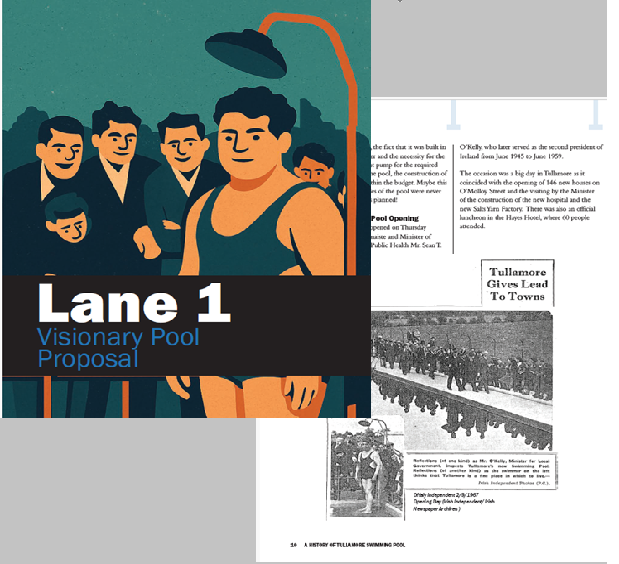
The opening chapter dives into the ambitious years leading up to the pool’s grand opening in 1938, exploring how a small midlands town managed to beat the odds. At a time when swimming pools were a rare luxury, almost exclusively confined to Dublin, Tullamore made history.
While locals had previously cooled off at Pallas Lake, and our neighbours in Templemore, Co. Tipperary, had rallied to build a voluntary community pool in 1935, Tullamore took a pioneering leap forward. Thanks to the forward-thinking Tullamore Town Council, they became one of the first in the country to successfully secure central government grants, pairing them with local funds to construct Ireland’s very first municipal pool.
Engineered with innovation in mind, the pool was built just outside the town to harness the natural flow of river water for sanitation. Complete with modern changing rooms and diving boards, The Irish Times hailed it as “one of the most up-to-date of its kind in the country.”
The pool was officially opened in 1938 by the Minister for Local Government, Seán T. O’Kelly. However, the historic day wasn’t without its drama, the chapter also uncovers the local controversy that erupted when the National Tricolour was left un-flown at the celebratory dinner reception!
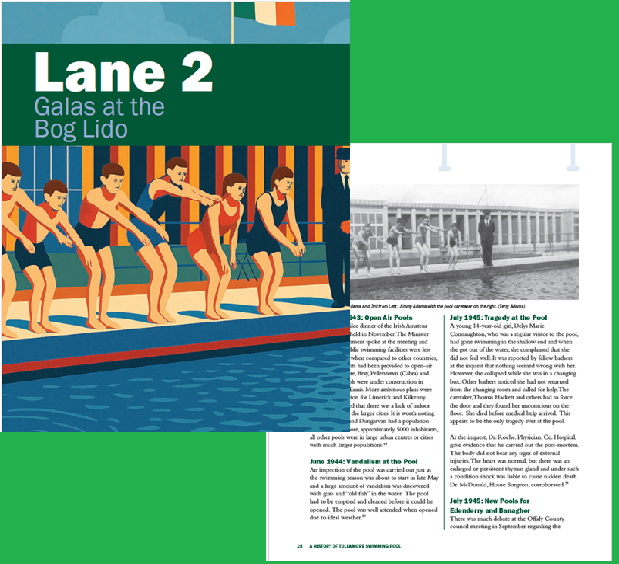
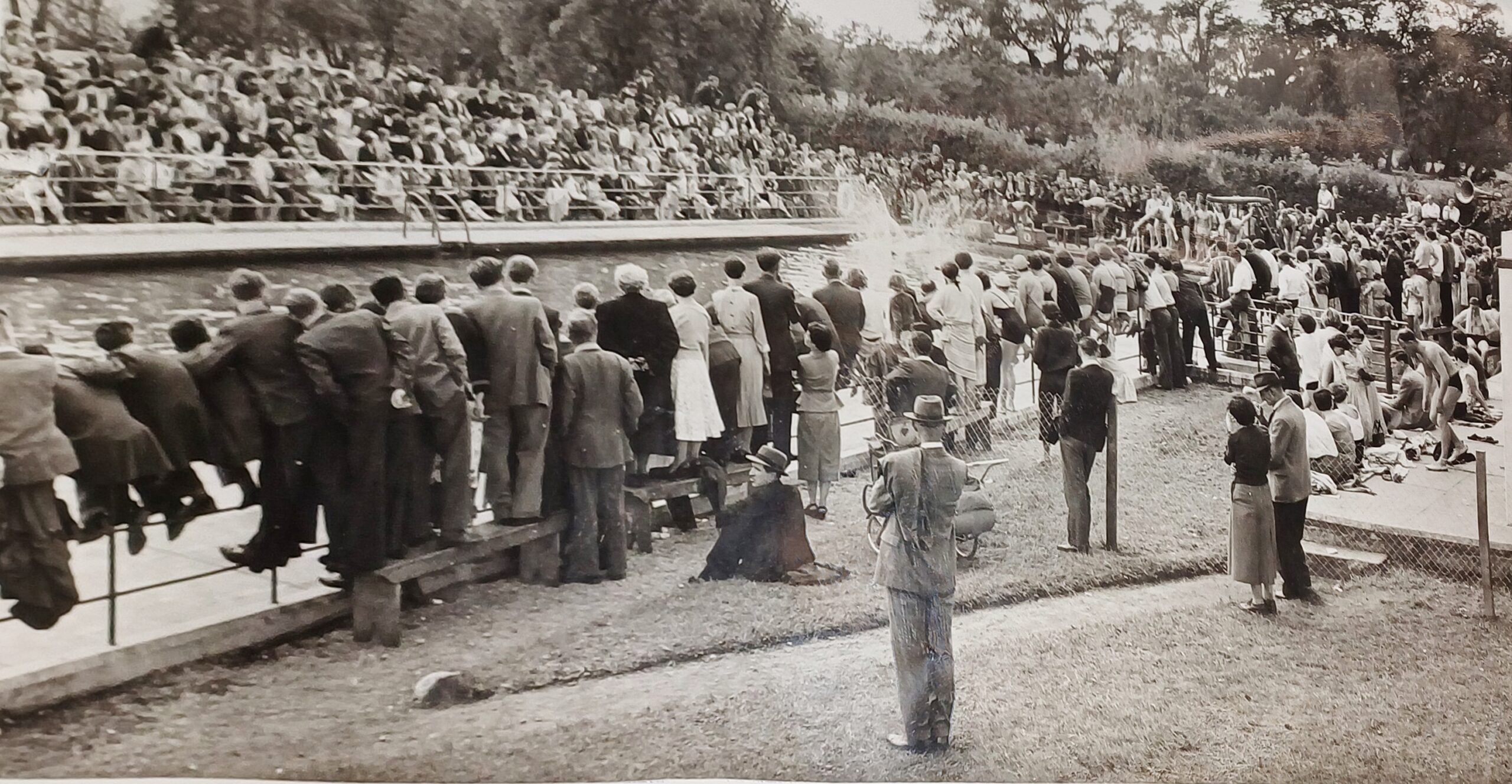
This chapter plunges into the pool’s early heyday, a time when Tullamore became a beacon for Irish swimming. The pool hosted massive swimming galas that drew spectacular crowds of up to 500 spectators. These wasn’t just local races, the galas featured water polo matches and jaw-dropping diving exhibitions by Eddie Heron, the legendary Irish National Champion and former British Champion. Even during the dark days of the Second World War, the pool remained a beacon of community spirit, with the local defence forces organizing galas with crowds entertained by local pipe bands.
However, these early decades also came with their own social quirks. In keeping with the times, the pool ran strictly segregated sessions for men and women. Despite the fact that women were allocated far fewer hours in the water than men, a local grievance emerged: the women were publicly accused of “monopolising” the pool!
By 1949, the outdoor pool was a roaring, undeniable success, logging a staggering 11,000 visits in a single year. Tullamore’s triumph sparked massive envy across the midlands, prompting dozens of neighbouring towns to demand pools of their own, though many would have to wait until the 1970s to finally get them.
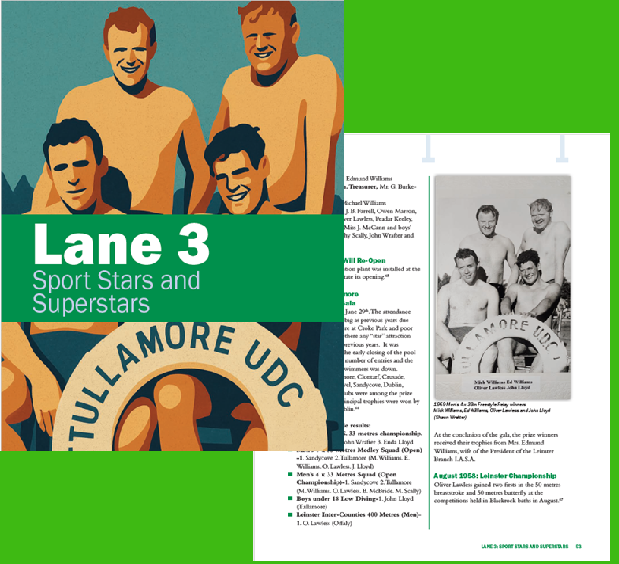
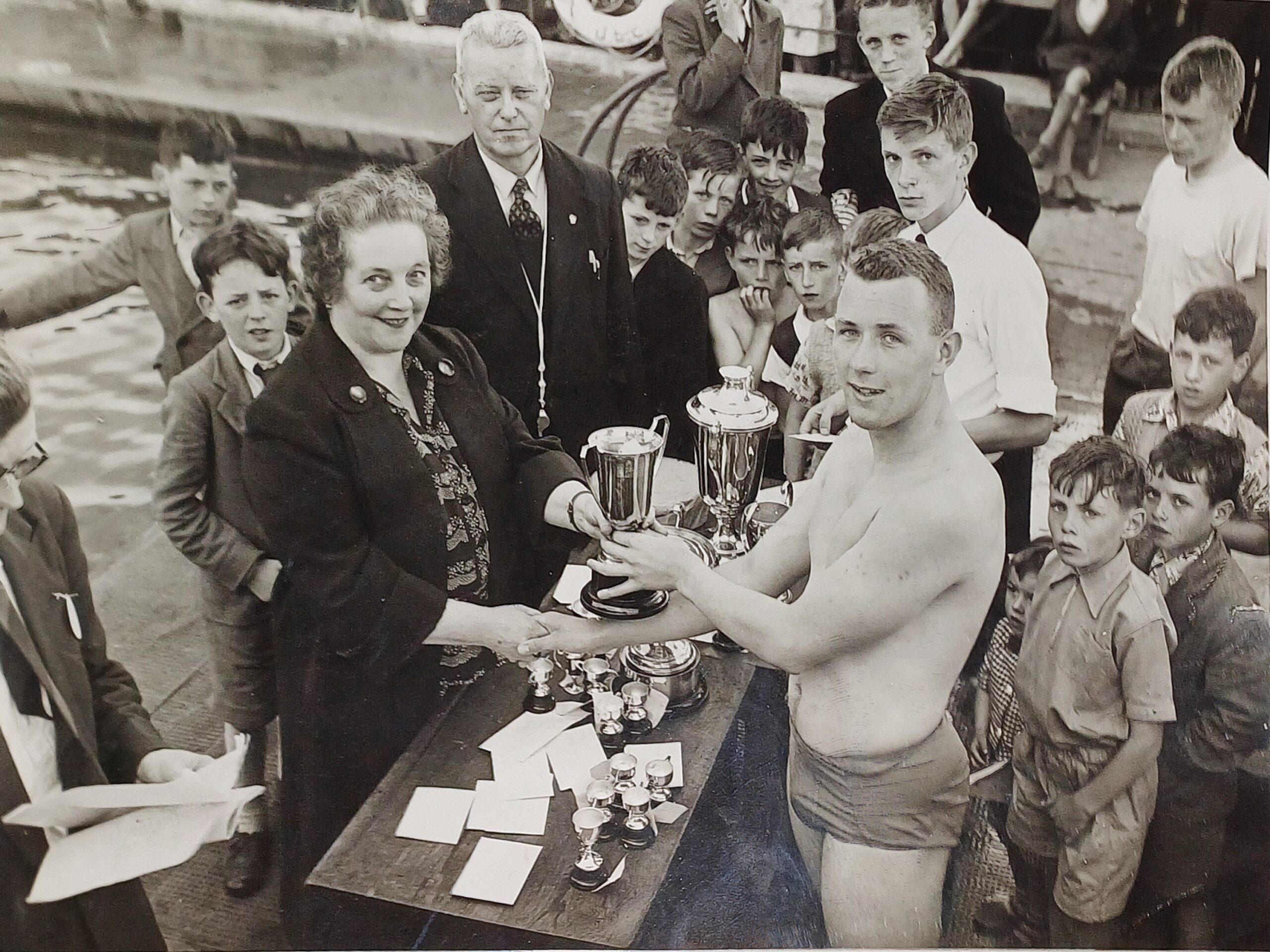
This decade marked the most active and successful years of Tullamore Swimming Club. Annual galas drew large local and national fields, with special exhibitions by well‑known Irish and British swimmers and divers. Temporary stands were erected to accommodate the crowds. Water polo matches featured regularly at these events.
Weekly training sessions and club competitions kept the pool busy, with results reported in the local press. Annual lifesaving classes were also a fixture. Local swimmers such as Oliver Lawless; the Williams brothers, Ed and Mick; and Donald Rumgay achieved success at national level.
In the mid‑1950s, the pool was extended from 100 feet to 33.3 metres so that national records set in Tullamore would be recognised. Attendance in the 1955 season reached 20,000. In 1957, British Olympian Ron Roberts provided coaching; however, a sudden closure due to poor water quality temporarily set back the club’s competitiveness. The late 1950s saw major upgrades, including new filtration and chlorination plant.
At the 10th annual gala in 1959, the highlight was an exhibition by British Olympic champion Judy Grinham and Irish champion diver Eddie Heron.
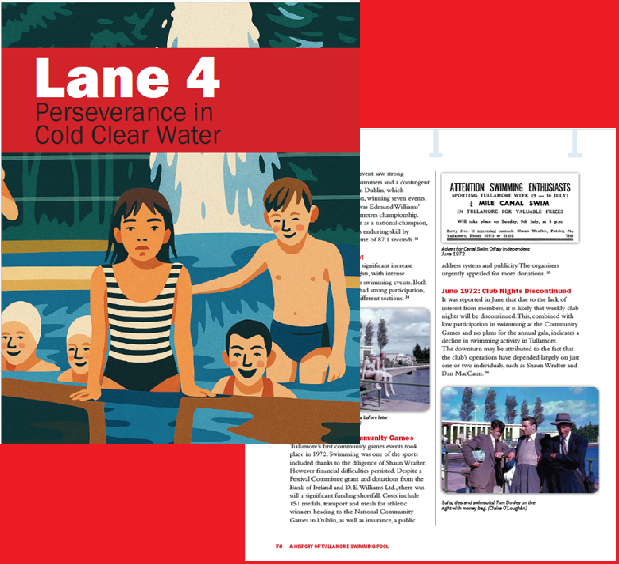
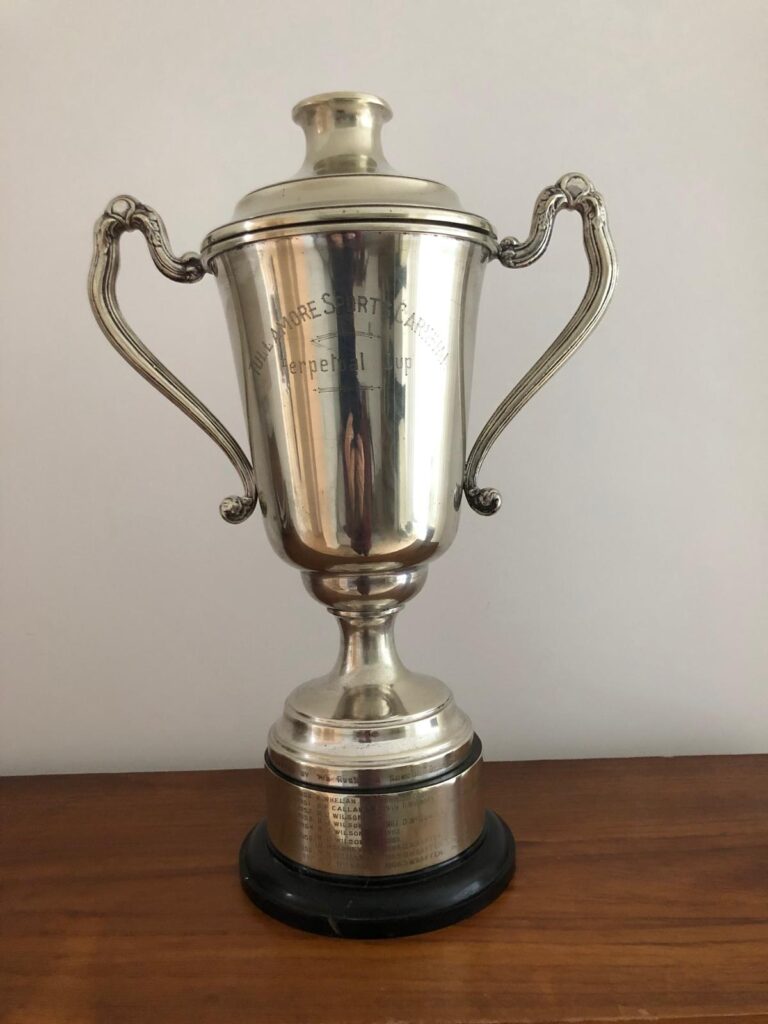
Following the successes of the 1950s, the club entered a period of gradual decline in both competitiveness and finances. Gala attendances fell as dates frequently clashed with Offaly football and hurling fixtures, and some events were limited to local swimmers only. The main trophies contested included the Dold Cup, Carnival Cup, D.E. Williams Cup, P & H Egan Cup, and the Salts Cup.
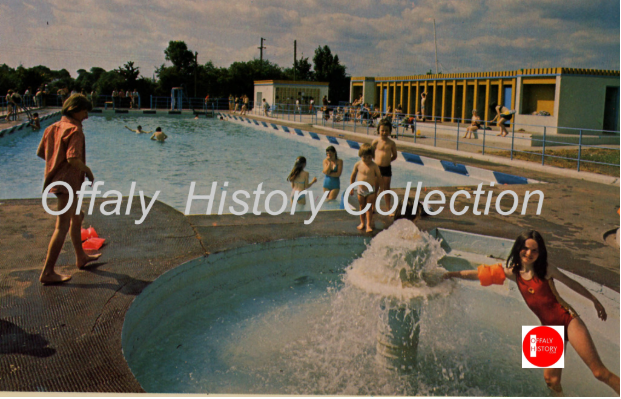
Despite frequent operating losses due to poor weather, incremental improvements were made at the pool, including additional changing cubicles and new toilets. Weekly club nights continued up to 1972. That same year saw the first Community Games swimming competitions, which offered alternative opportunities for local swimmers.
Vandalism was a recurring problem. In 1961, five boys aged nine to thirteen appeared in court and were warned that damaging property was as serious as theft. In 1970, proposals were tabled to either upgrade the existing pool to an indoor, heated facility or to build a new one; it would be many years before Tullamore finally had a heated indoor pool.

Until the early 1980s, the pool was managed solely by caretakers, the first lifeguards were Pat Dunne and Kieran O’Keeffe in 1973 and Olive Finlay was the first female lifeguard in 1976.
A new heated pool, first proposed in 1961, opened in Clara in 1973, just 11 km from Tullamore and the other indoor pools in Offaly – Birr and Edenderrry opened later. Lifesaving weeks were hugely popular across Offaly’s three indoor pools and at Tullamore’s outdoor pool, with 363 certificates issued in 1973.
The hot summer of 1978 brought overcrowding at the outdoor pool, yet gate receipts still failed to cover operating costs. Annual galas continued, organised by a dedicated local group of swimmers, and the annual canal swim drew large spectator crowds. Offaly swimmers also competed in the National Community Games finals at Butlins.

With the annual swimming galas discontinued, Community Games continued to offer under‑17s local and national competition pathways, and lifesaving weeks remained popular. Meanwhile, the need for an indoor pool was widely acknowledged. The outdoor pool was deteriorating and required significant investment.
Cost estimates escalated sharply: an indoor pool priced at £37,000 in 1970 had risen to £350,000 by 1993. Nevertheless, a fundraising campaign was launched, and a feasibility study, funded by voluntary donations, was commissioned. The 1992 study projected a £2 million build cost and annual running costs of £190,000. Compounding matters, the three indoor pools built in the 1970s in Birr, Clara, and Edenderry were all in poor repair and required substantial funding. With three Offaly pools needing costly refurbishment and Tullamore seeking a new indoor facility, it seemed unlikely that all four would be financed by government.
The outdoor pool’s final eight‑week season in 2000 recorded attendance of 3,000 and employed five lifeguards. By then, the diving boards had been removed, the filtration system needed replacement, and long‑standing traditions, such as the annual gala, lifesaving weeks, and local Community Games heats, had either ceased or moved elsewhere. The closure was expected to inject urgency into the long‑running indoor pool campaign. A new indoor pool and leisure centre eventually opened in Tullamore in 2008, at a cost of €12.8 million.